I Wonder What My Dog Named Me
A Designer’s First Look: Charm Without Clutter
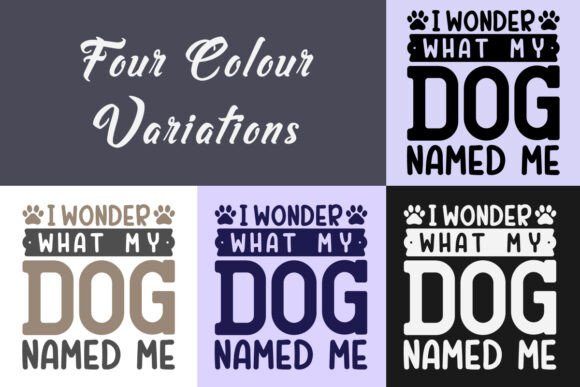
When I opened the I Wonder What My Dog Named Me design, what struck me first wasn’t technical precision—it was warmth. The phrase sits in a clean, friendly sans-serif with gentle curves and balanced spacing—not too tight, not too airy. There’s no dog illustration attached, no paw prints or bones tacked on as afterthoughts. That’s intentional restraint, and it works. This isn’t a busy clip art bundle; it’s a quiet, confident statement that leans into emotional resonance over visual noise. As a designer who’s stitched hundreds of quote-based pieces for Etsy sellers and boutique clients, I immediately pictured it on a soft cotton tote bag—minimalist, heartfelt, and unmistakably handmade.
Where It Shines: Real Projects, Real Customers
I Wonder What My Dog Named Me lands beautifully on mid-weight fabrics where stitch clarity matters most. I tested it on a brushed cotton sweatshirt last week for a local pet rescue fundraiser—and it held up perfectly. The letterforms are generous enough to avoid fill-stitch bleeding, yet compact enough to fit comfortably in a 4x4 hoop without shrinking or losing legibility. It reads well at 3.5 inches wide, making it ideal for left-chest embroidery on tees, baby onesies, and aprons. I’ve also used it as a focal line on embroidered pillow covers for nursery decor, and customers consistently comment on how “true” it feels—not cutesy, not ironic, just tender.
For craft businesses, this design bridges personalization and scalability. An Etsy seller can pair it with neutral thread colors (heather gray, oatmeal, navy) and offer it across multiple product types—tote bags, tea towels, even vinyl-cut iron-ons for quick turnaround. Its simplicity makes it easy to mock up digitally, too. In printable mockups, it maintains brand cohesion whether placed on a cream linen tea towel or a charcoal crewneck.
Where to Pause: Texture, Scale, and Fabric Reality
This isn’t a one-size-fits-all embroidery file. On highly textured fabrics like bouclé or thick terry cloth, the clean lines can blur unless you adjust stabilizer and stitch density manually. I’d skip it on ultra-thin rayon or stretchy performance knits without significant digitizing tweaks—those fine interior spaces between letters need stability to stay crisp. And while it works on dark fabric, avoid light thread on black fleece unless you’re using high-contrast poly or metallics; subtle grays and creams vanish without backing.
Caps and curved surfaces? Proceed carefully. The straight-line layout doesn’t wrap naturally around crowns or visors. I’d reposition it horizontally across the front panel—not arched—and reduce width by 10% to prevent distortion. Also, don’t force it into sub-3-inch applications: tiny lettering risks running stitch instability and thread breakage, especially in satin-stitched caps or patches meant for frequent washing.
Stitching Notes Every Embroiderer Should Check
- Test first—always run a sample on scrap fabric matching your final garment’s weight and stretch.
- Review thread color contrast before stitching: what reads softly on screen may disappear on fabric.
- Confirm hoop size compatibility; while scalable, extreme resizing affects stitch density and underlay balance.
- Inspect corners and terminals—clean ends matter for professional presentation, especially on personalized gifts.
- Try black-and-white mockups to assess value contrast before committing to a full run.
- Use tear-away + cut-away combo stabilizer on knits and lightweight weaves—this design benefits from firm support beneath the letterforms.
- Verify licensing before selling finished items or reselling the digital embroidery file—this is a Graphics asset, not pre-cleared for unlimited commercial redistribution.
Why It Builds Trust—Not Just T-Shirts
Customers don’t buy text—they buy meaning. I Wonder What My Dog Named Me taps into something quiet but universal: the deep, wordless bond between people and dogs. That emotional hook elevates a simple tote bag into a keepsake. When I stitched it onto a linen kitchen towel for a wedding gift, the recipient cried—not because of the stitching, but because the phrase landed exactly right. That’s the power of thoughtful design judgment.
For small shop owners and Etsy sellers, that resonance translates directly to perceived value. A well-executed I Wonder What My Dog Named Me embroidery project looks intentional, not templated. It supports brand consistency when paired with cohesive packaging and photography. And because it avoids trend-driven clichés (no cartoon pups, no glitter fonts), it stays relevant across seasons—ideal for holiday embroidery, baby embroidery, or year-round custom apparel.
Final Thought: Design With Purpose, Not Just Pixels
This isn’t just another T-Shirt Designs download. I Wonder What My Dog Named Me is a focused, emotionally intelligent piece of design assets—simple in form, rich in implication. It performs reliably across sweatshirt embroidery, embroidered patch production, and personalized gift work—but only when matched thoughtfully to fabric, scale, and end use. As a machine embroidery design, it rewards attention: test it, tweak it where needed, and let its quiet sincerity do the talking. Done right, it doesn’t just decorate a product—it connects.