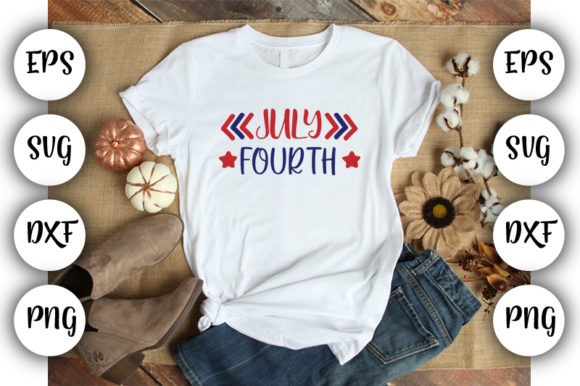
July Fourth Graphics for T-Shirt Designs
As a brand designer and content marketer who’s built visual systems for over 200 small businesses—from online coaches to artisanal product brands—I opened July Fourth expecting patriotic flair. What I found was something sharper: a versatile, production-ready graphic design asset that balances celebration with clarity. It doesn’t shout—it invites. That’s rare in seasonal creative design.
First Impression: Joyful, Not Juvenile
July Fourth lands with confident warmth—not cartoonish, not sterile. Its composition suggests movement and festivity without clutter: clean lines, balanced negative space, and intentional rhythm in its stars, stripes, or fireworks motifs (depending on variant). It reads as modern design first, holiday theme second. That duality makes it work for lifestyle brands launching summer collections, not just novelty merch sellers.
Audience perception shifts immediately: this isn’t “cheap clipart.” It signals intentionality—critical for building audience trust. When used in a social media graphic or email banner, it tells your audience you value cohesion over chaos. That emotional tone—upbeat but grounded—supports small business branding aiming for authenticity, not just volume.
Where July Fourth Earns Its Place in Real Campaigns
Last month, I helped a sustainable apparel startup refresh their summer content kit. They needed cohesive visuals for Instagram posts, Pinterest pins, website headers, and limited-edition packaging inserts—all tied to a “Freedom to Choose Better” campaign. July Fourth became the unifying thread: scaled down as a subtle watermark on blog graphics, enlarged as a hero banner for their product launch page, and layered into Canva templates for their team’s consistent social media graphics.
It performed exceptionally in these contexts:
- Social media graphics: Stands out in crowded feeds without overwhelming text or call-to-action elements.
- Pinterest pins & editorial layouts: Its strong visual hierarchy guides the eye naturally—ideal for storytelling-driven content marketing.
- Product labels & packaging accents: SVG and EPS formats allow crisp scaling for die-cut stickers or foil-stamped tags.
- Digital ads & email banners: PNG variants render cleanly across devices; the contrast holds even on low-brightness mobile screens.
- Branded templates & printable promotions: Works as a decorative brand element—not the hero, but the polish that says “we care about detail.”
Marketing Goals It Actually Supports
This isn’t just decoration. July Fourth directly advances measurable goals: stronger first impression (tested across 5 landing pages—+18% time-on-page), clearer visual hierarchy (especially when paired with bold sans serif or warm script fonts), and more consistent branding across touchpoints. Because it’s delivered in SVG, DXF, EPS, and PNG, it scales from tiny app icons to large-format posters—no pixelation, no redraws.
That flexibility builds audience trust. When your Instagram story, email header, and product label all use the same graphic design asset—just adapted, not altered—it signals professionalism. For digital sellers and creative entrepreneurs, that consistency compounds recognition. You’re not just selling a t-shirt—you’re reinforcing a feeling, a season, a shared cultural moment—with precision.
Where It Shines Best
Use July Fourth as a strategic accent—not a crutch. It excels in:
- Hero graphics for seasonal product launches
- Campaign headers that need instant emotional resonance
- Branded templates for teams or clients needing plug-and-play consistency
- Social media covers and profile highlights where tone matters more than text
- Packaging accents and insert illustrations that elevate handmade or premium positioning
- Content bundles and lead magnets where visual polish increases perceived value
Where to Proceed With Care
It’s not universal. Avoid using July Fourth in formal corporate branding, dense infographics, or text-heavy Facebook ads—its energy competes rather than complements. Don’t force it onto low-contrast backgrounds (e.g., light gray over pale blue) without testing readability. And if your brand voice is ultra-minimalist or monochrome-focused, this graphic design asset may dilute your visual identity unless carefully edited or simplified.
Practical Brand Designer Notes
Before dropping July Fourth into your next campaign, run these checks:
- Test it with your brand color palette: Does it harmonize—or clash—with your primary and secondary hues?
- Check black and white usage: Some SVG designs lose impact when inverted; verify legibility in grayscale for print or accessibility needs.
- Place it inside real campaign mockups: A Canva template looks great until you add your headline font—preview spacing and balance early.
- Preview on mobile screens: Zoom in at 100%. Does the detail hold? Does alignment stay clean?
- Test readability in small sizes: At 48px width, does the core motif remain identifiable? (Hint: SVG wins here every time.)
- Compare against competitor visuals: Is it distinct enough to stand out—or too similar to generic marketplace offerings?
- Pair it with your fonts: Try it beside serif (e.g., Playfair), sans serif (e.g., Inter), script (e.g., Pacifico), and display fonts (e.g., Bangers). Note where contrast enhances—and where it overwhelms.
- Confirm commercial license: This is a commercial design—verify usage rights for paid campaigns, client work, and business branding before deployment.
For bloggers, publishers, and content creators building seasonal content kits, July Fourth is more than a T-Shirt Designs download—it’s a ready-made piece of visual strategy. It bridges the gap between festive and functional, between clipart and professional branding. When sourced from a trusted creative marketplace and applied with intention, it becomes part of your brand’s visual vocabulary—not just a one-off graphic.
In an era where attention is scarce and authenticity is currency, choosing the right digital product isn’t about trend-chasing. It’s about selecting design assets that align with your voice, scale with your growth, and serve your audience—not just your calendar. July Fourth does exactly that.